
Applications

Sea chests and strainers

Fouled sea chests and strainers starve engines and generators of cooling water. A transducer on the dry side of the sea chest keeps the intake clear. For commercial cooling systems, see ENVSonic.

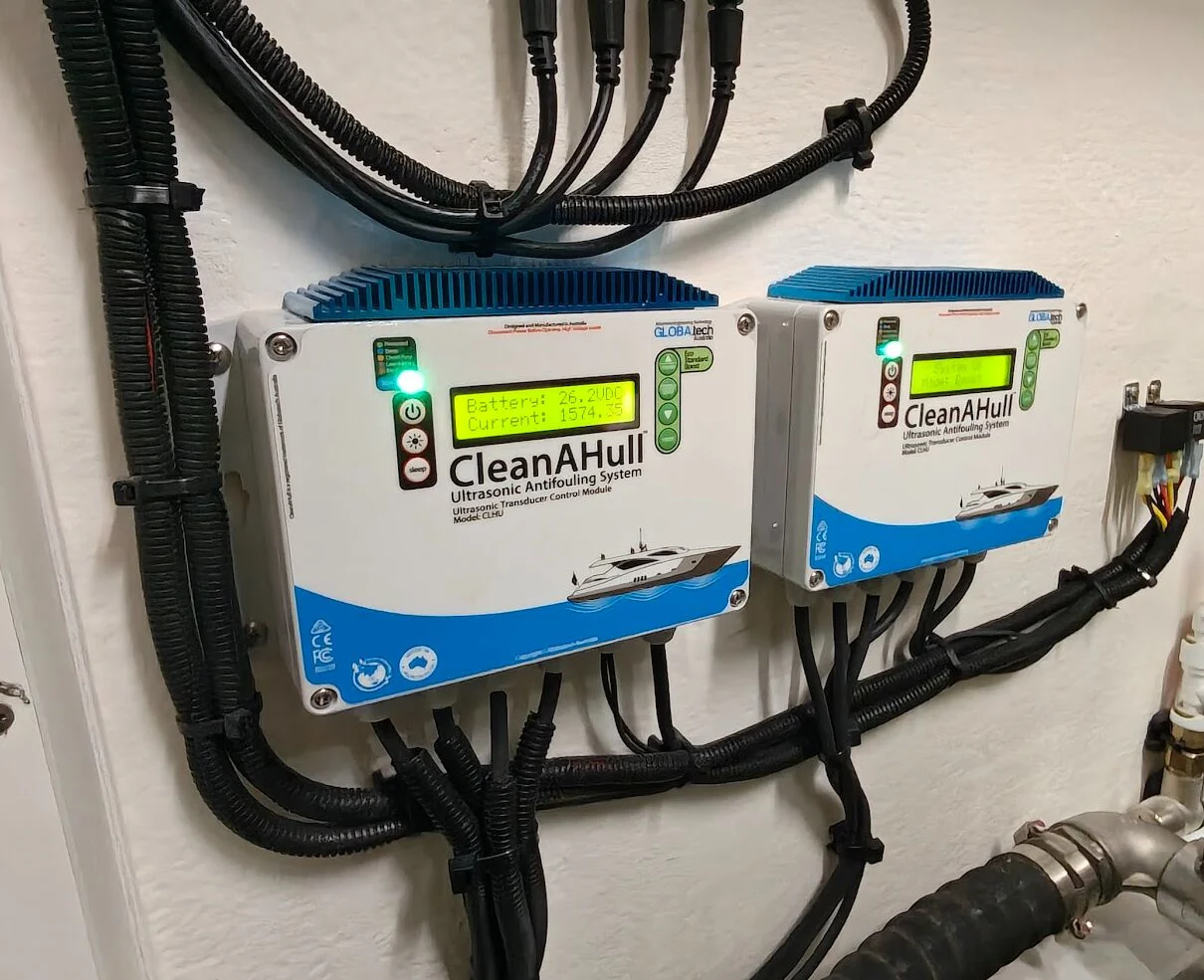
Two controllers (CleanAHull, now HullSonic MAX) installed in an engine room

Where the transducers go

  • Its own transducer: a sea chest or strainer is normally protected by a transducer of its own, on the dry side of the chest or on the strainer body.
  • One channel: it uses one channel of an HS or MAX controller, alongside the hull transducers.
  • Larger chests and box coolers: on MAX, channel grouping drives two transducers as one zone.
  • In the planner: choose the strainer and the layout puts a hull transducer close to it, with a note to check the strainer itself. Tell us its make and size and we will confirm how to protect it.
At a glance

Raw-water intakes and strainers: what we protect and how

Plan my layout
Protects Sea chests, strainers, keel coolers
Typical system A dedicated channel on HS or MAX

See the layout for your boat

Pick your boat, drive and what to protect. The planner places the transducers and builds your cart.

Plan my layout