
MAX · superyachts and prestige · formerly CleanAHull
New
HullSonic MAX2
Two commercial-duty channels on the MAX controller
HullSonic MAX, formerly CleanAHull: the four-channel MAX controller at 60 W per channel with two transducers. Channels 3 and 4 are installed and switched off; add the MAX transducer upgrade kit any time.
Specifications ↓2 + 2
Transducers, upgradeable
60 W
Per channel, 45–65 W
3 yr
Warranty
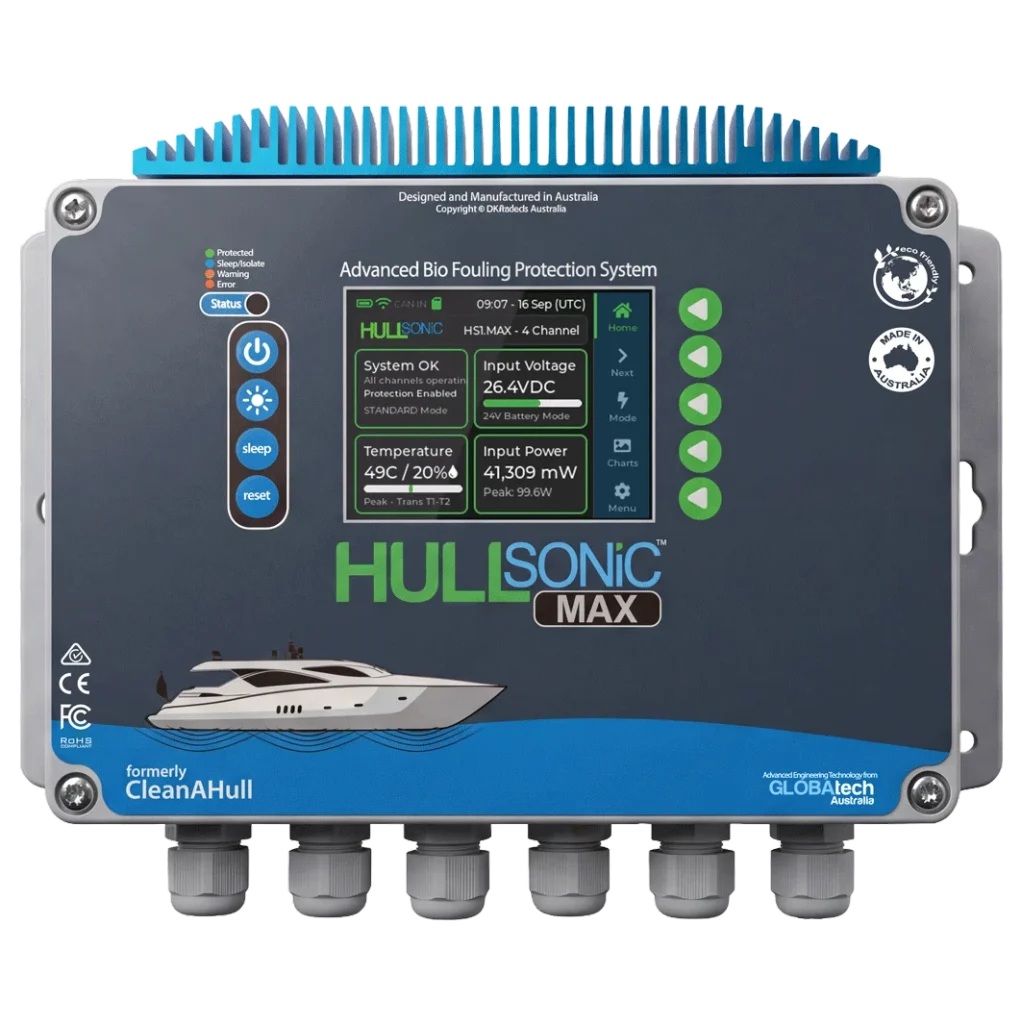
Commercial-grade power and reliability, built for superyachts and prestige vessels. Higher output, channel grouping, and the integration I/O a managed vessel actually needs.
MAX2 is a full four-channel commercial-duty control module supplied with two transducers — and the same upgrade path to four.
Where MAX comes from
MAX draws on two decades of GLOBAtech systems that run continuously on working vessels, where a fault that goes unnoticed costs real money. What came back from that experience is what MAX is: more output, more control, and the ability to talk to the rest of the boat.
Formerly CleanAHull, now consolidated into the HullSonic range under the MAX name. Same architecture, same engineering lineage, one brand.
45–65W per channel, defaulting to 60W
Where the HS series runs 45–55W, MAX runs 45–65W per channel, factory-set to 60W — more acoustic energy into the hull, with more headroom when fouling pressure demands it. On thick steel or aluminium hulls, cored sections, and vessels in persistently warm water, that margin is the difference between control and catch-up.
Channel grouping
MAX can operate two matched channels as a bonded pair, driving a matched transducer set together across a single acoustic zone. On large flat hull sections and sea chests — where a single transducer can’t load the structure evenly — grouping delivers coherent coverage instead of two independent sources fighting for the same panel.
Integration I/O — the part that matters on a managed vessel
- Alarm header — fault and status output to the vessel’s monitoring or alarm system, so a failed channel raises a flag at the panel instead of being discovered at haul-out.
- Isolation input — clean external inhibit for hot-work, diving operations, survey or any procedure requiring the system stood down, without pulling breakers.
- External boost input — trigger BOOST mode from a vessel management system, a timer or a switch, for scheduled high-output periods.
This is the specification difference between a recreational product and one that belongs in an engine room with a documented systems list.
Four channels of hardware, two working today
Like every current HullSonic module, MAX2 is four-channel hardware with channels 3 and 4 inactive. The MAX transducer upgrade kit takes it to a full four-transducer MAX4 installation whenever you’re ready — no module change.
Colour display, WiFi and OTA
Full-colour per-channel status, drive power, calibration state and fault reporting. WiFi for configuration, diagnostics and over-the-air firmware updates.
12–24 V, auto-sensing
One unit for both bus voltages. No configuration, no variants.
Each transducer has 10 m (32 ft) of cable attached. On a larger boat a cable may need extending to reach its transducer: contact us for advice. Bigger boats combine systems, and the layout planner works out how many transducers yours needs.
Hardware
A closer look
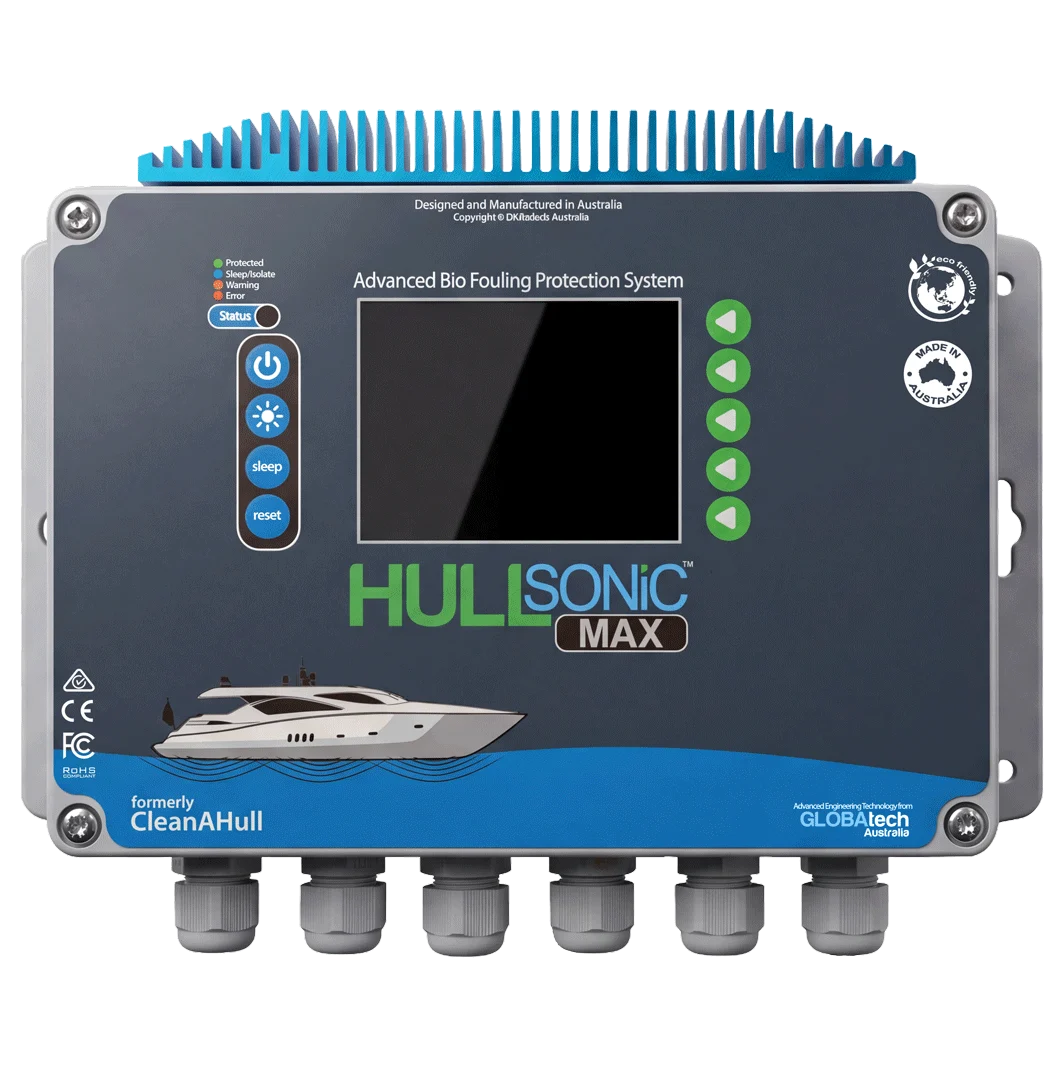
MAX control module
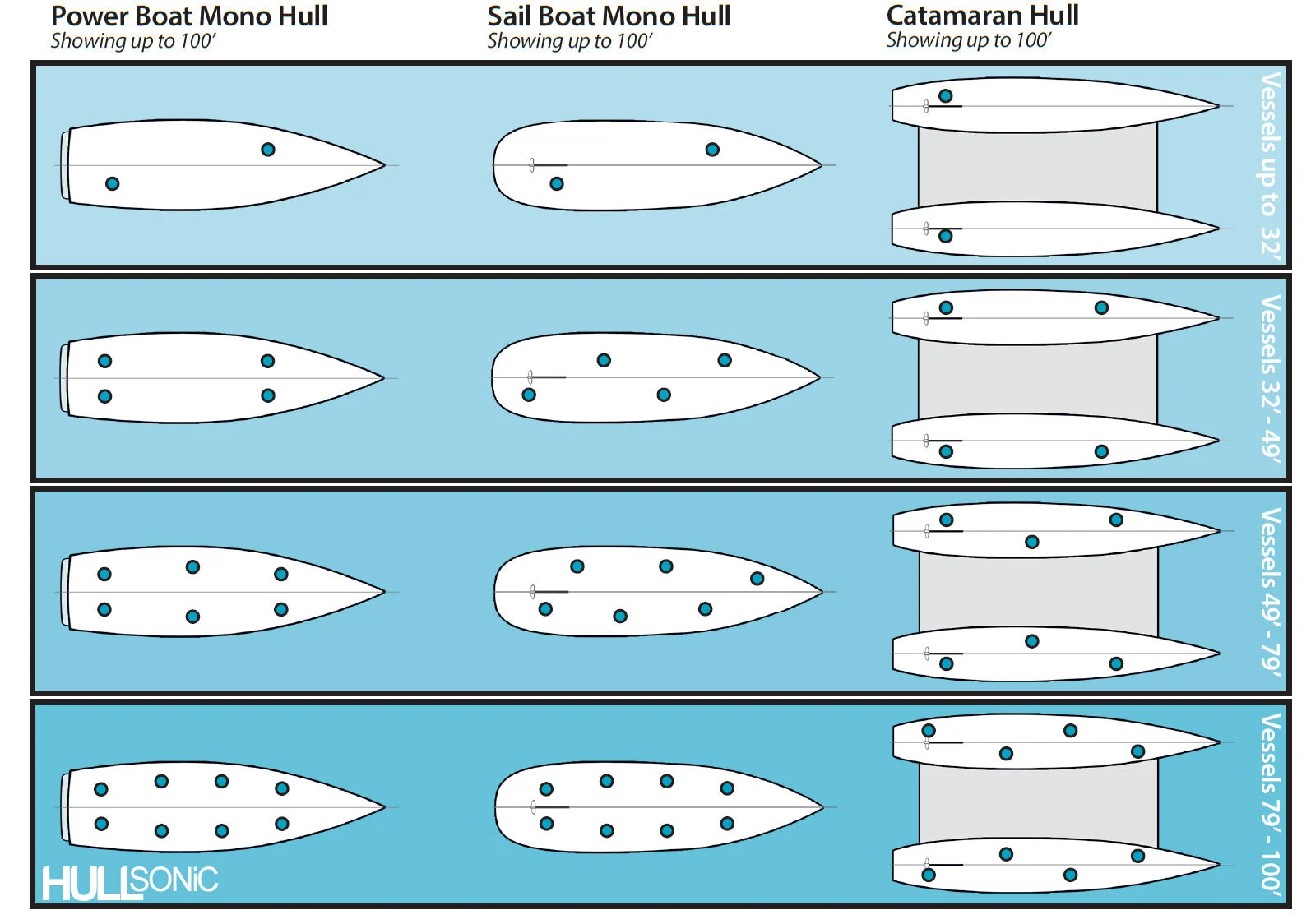
Transducer layout guide by boat length
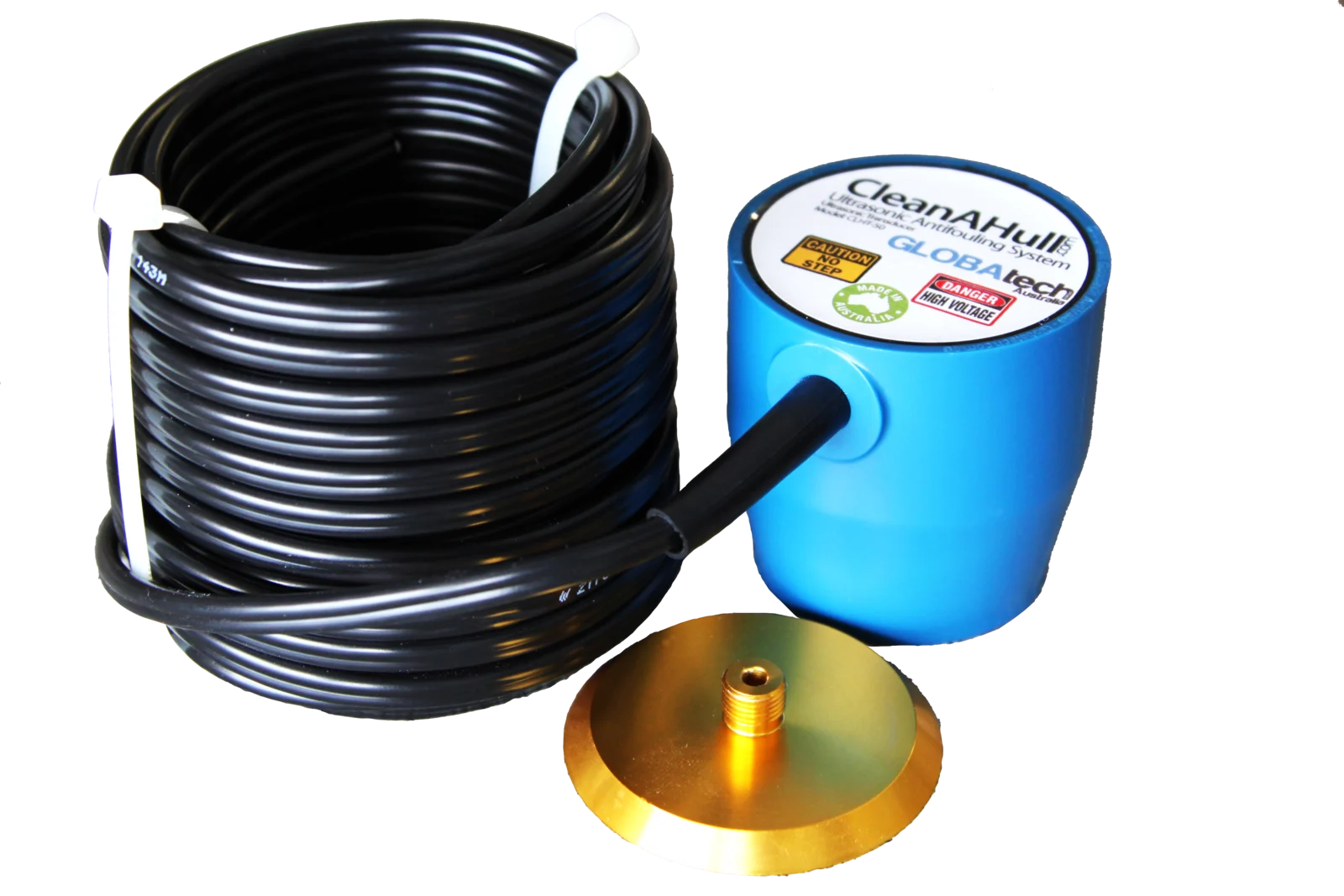
HS-T60 transducer, cable and mounting ring
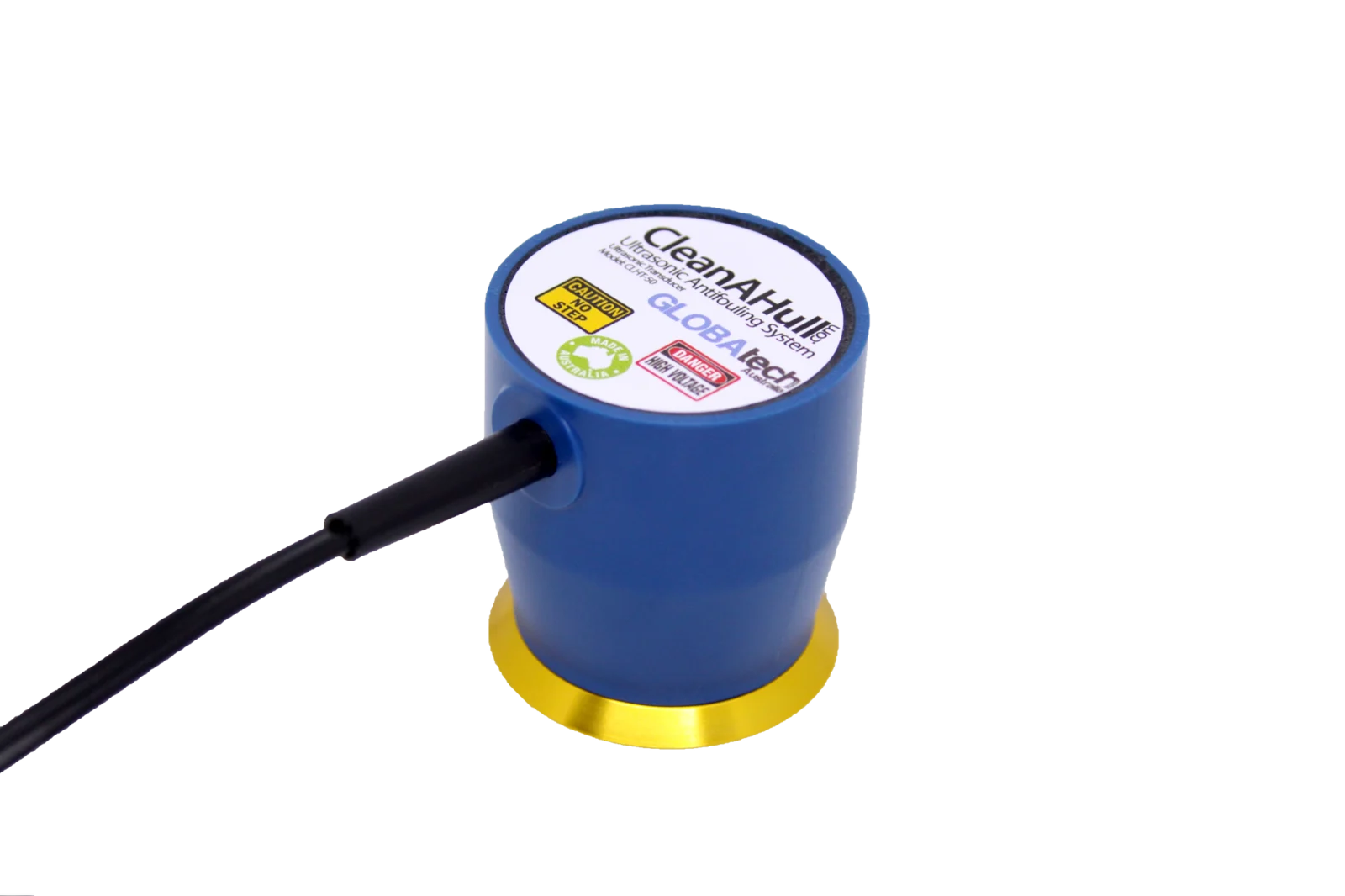
HS-T60 transducer
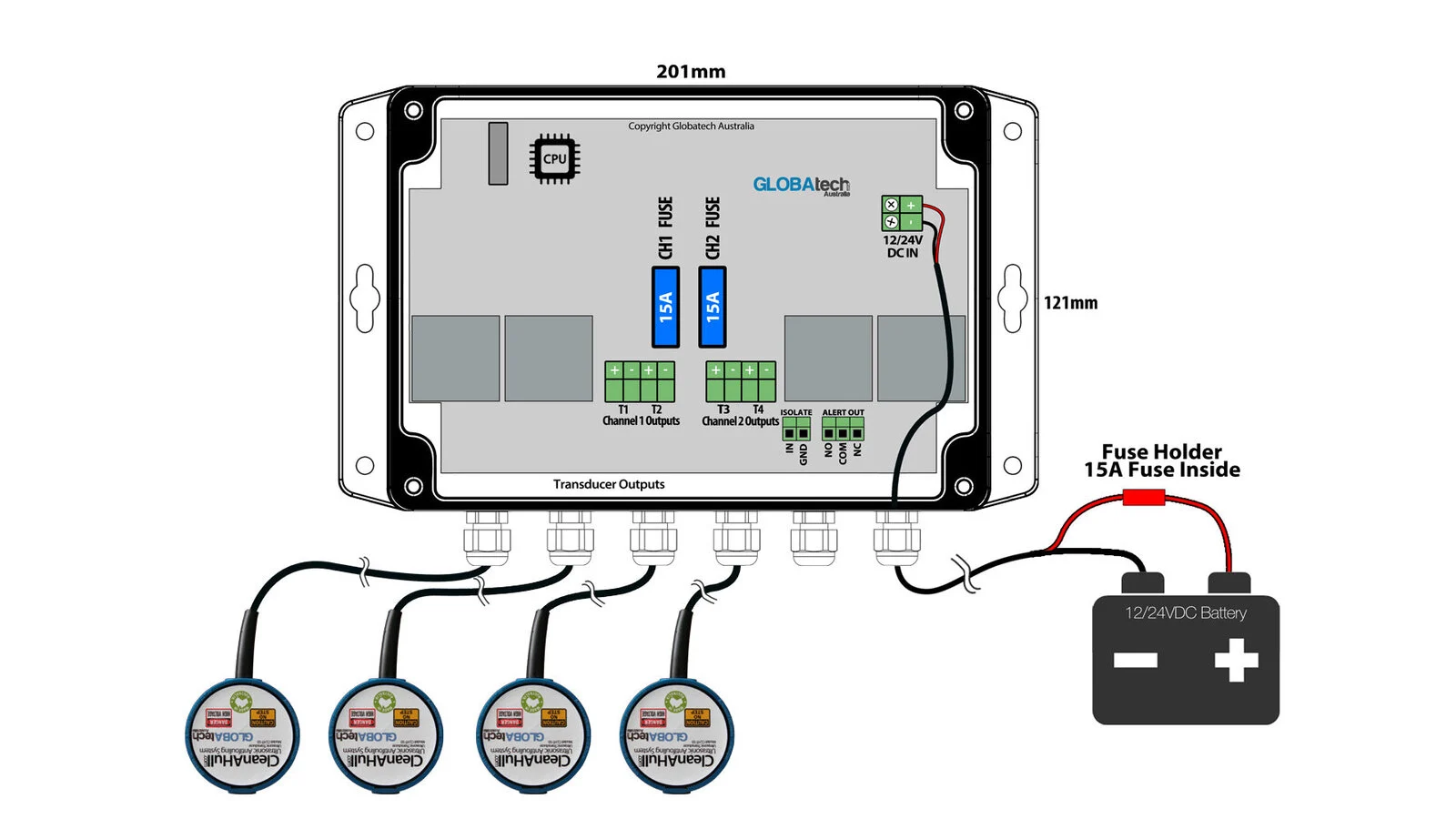
MAX wiring: transducers, supply, isolate input and alert output
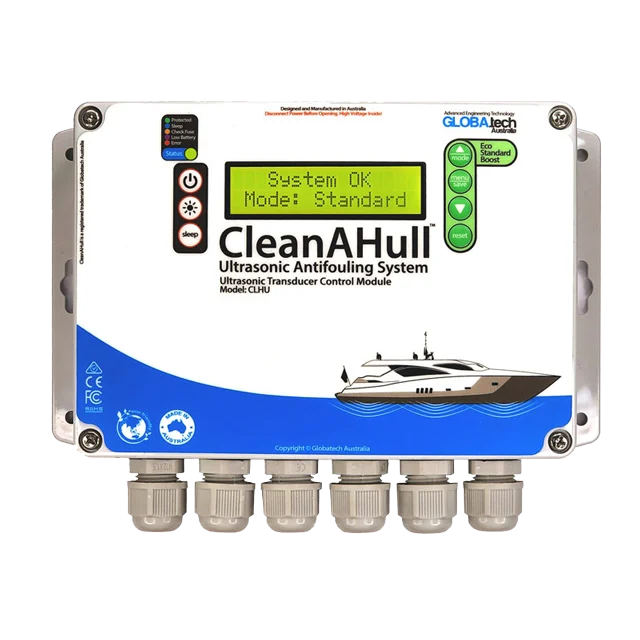
CleanAHull control module, the earlier generation
Features
What's in the box
01
Control module
HullSonic MAX2, 4-channel commercial-duty hardware with 2 channels active
02
2 × HS-T60 transducers
Each with 10 m (32 ft) of silicone rubber cable attached
03
2 × mounting rings
Bonded inside the hull; each transducer screws into its ring
04
Gasket material
A tube of Loctite 515 for the transducer faces
05
Power cable
5 m (16 ft) silicone rubber battery cable, already attached to the module
06
Installation kit
JB Weld epoxy adhesive and mixer
07
Fuses
In-line fuse and a spare fuse kit
08
Manual
Full-colour installation and operation manual
Specifications
HullSonic MAX2 at a glance
Controller
4-channel hardware
Transducers
2 × HS-T60
Output per channel
45–65 W, 60 W default
Frequency
19–80 kHz, auto-calibrating per channel
Supply
12–24 V DC, auto-sensing
Transducer cable
2 x 10 m (32 ft) silicone rubber
Ingress protection
IP67 control module, IP68 transducers
Display
Colour display
Power modes
ECO / STANDARD / BOOST
Connectivity
WiFi, over-the-air firmware updates
Integration
Alarm header, isolation input, external boost input, channel grouping
Warranty
3 years return-to-base, extended while a HullSonic dashboard plan is active
Certification
FCC · CE · RCM · RoHS (control module)
Owners
Clean hulls, in their words
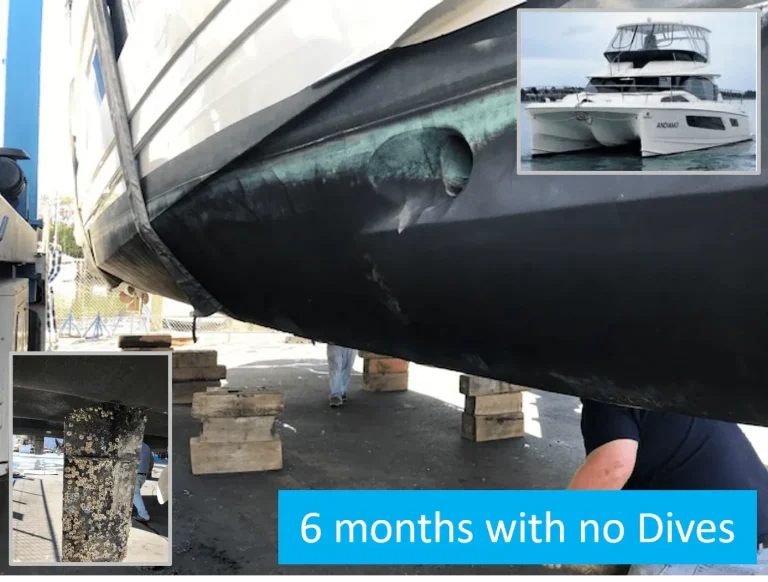
Six months in Sarasota, hull never cleaned.
“My 44-foot Aquila power cat has now been in the hot, fertile, Sarasota water for approximately six months. In that time, I have not cleaned the hull once.”
Nine months, no bottom cleaning.
“I have not had to clean the bottom once in the nine months since it was installed. What slime builds up on the bottom is dead and washes right off when the boat starts moving.”
See where the transducers go on your boat
Pick your boat, drive and what you want protected. The layout planner draws the transducer positions on your hull and puts the matching system in your cart.