
Applications

Powerboats

Planing and displacement powerboats spend most of their life on the mooring, where fouling does its damage. A layout covers the wetted hull and puts a transducer as close as it can to the shafts, props and rudders, or the legs on sterndrive and outboard boats.

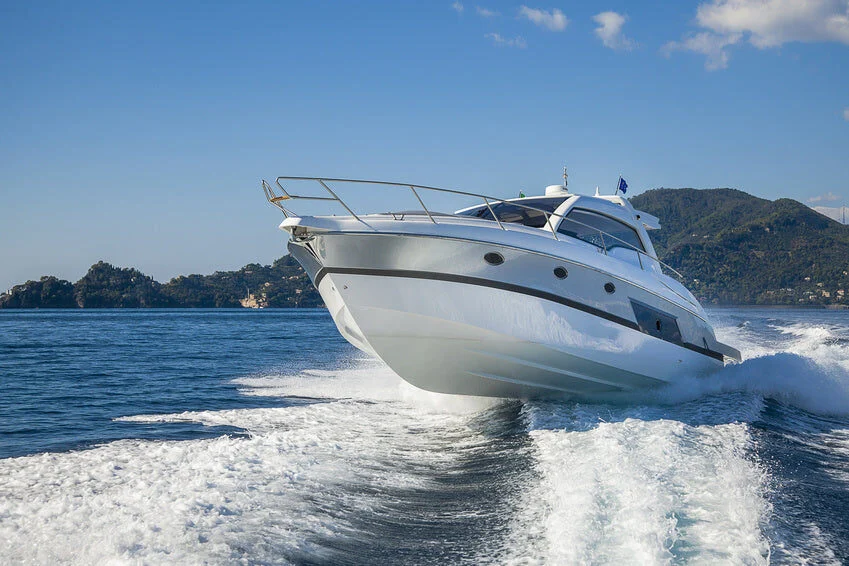
A sports cruiser underway at speed along a rocky coastline

Where the transducers go

  • Hull: transducers sit inside the hull below the waterline, port and starboard, set out from the keel line so their zones overlap along the boat.
  • Shaft drives: the shafts and propellers get some protection from the transducers nearest them, less than the hull itself. Larger boats can also take a transducer on each rudder’s tiller arm.
  • Sterndrives and outboards: the legs get some protection from the hull transducers nearest the transom.
  • Pod drives (IPS, Zeus): a transducer on each drive as well as the hull.
  • Jet drives: a transducer beside each jet intake.
  • Thrusters: on larger boats, a transducer on the thruster tunnel.

Typical layouts by boat length
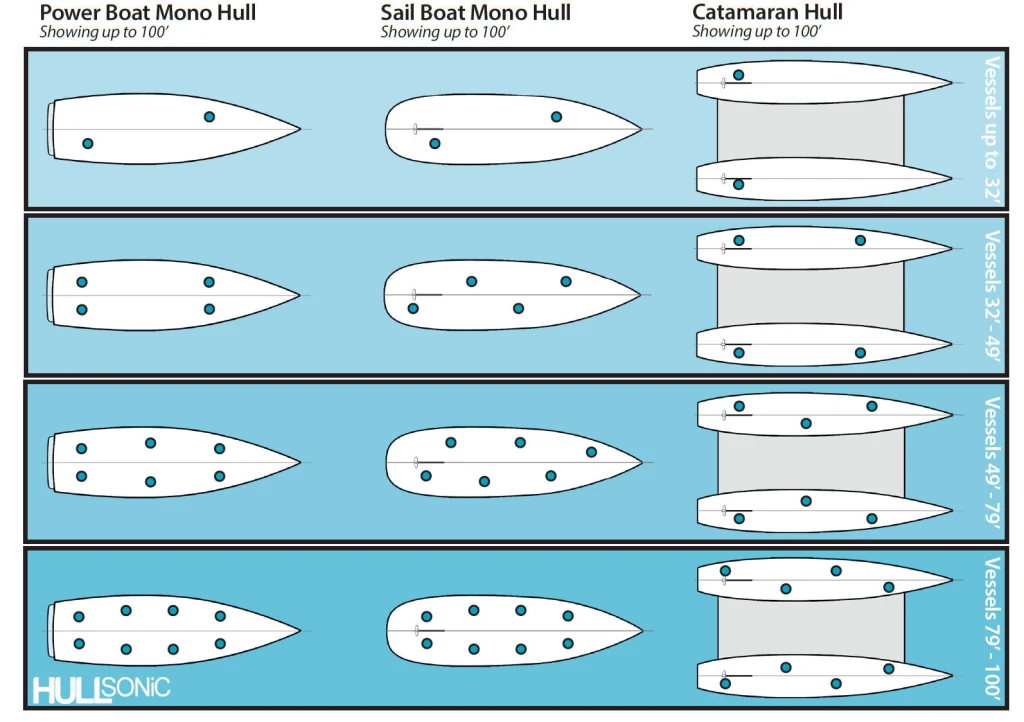
Transducer layout guide by boat length

A guide only. The layout planner works out the positions and the system for your own boat.

At a glance

Cruisers, sedans, flybridges and sportfishers: what we protect and how

Plan my layout
Protects The hull, and to a lesser degree shafts, propellers, rudders and legs
Typical system HS200 or HS400; MAX4 for larger motor yachts

See the layout for your boat

Pick your boat, drive and what to protect. The planner places the transducers and builds your cart.

Plan my layout